

Imagine a world where every day at work is a source of enjoyment and motivation. A world where your skills, passions, and business needs are perfectly aligned. That world isn’t some far-off utopia, but an attainable reality thanks to the Japanese concept of ikigai.
What is ikigai?
Ikigai is a Japanese concept meaning “reason for being.” It’s the art of finding what gives your life meaning, your life’s calling.
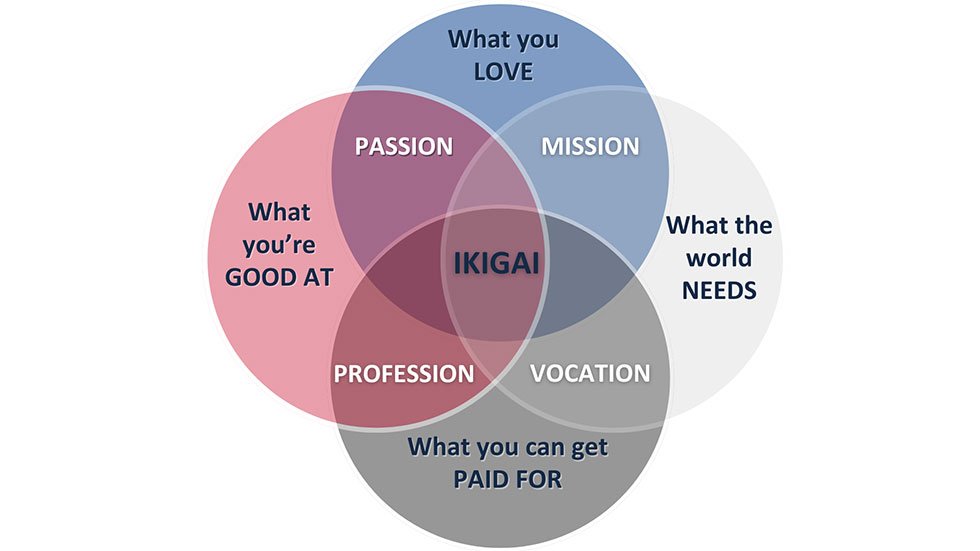
Finding your ikigai requires a great deal of reflection on:
- What you love
- What you’re good at
- What the world needs
- What you can get paid for
When all these elements come together, they create a powerful synergy that fuels your motivation and job satisfaction.
The benefits of ikigai
Ikigai helps to improve general well-being. In concrete terms, it has many advantages for everyone:
- Lower stress
- Greater job satisfaction
- Higher productivity, as every task takes on meaning and becomes a source of motivation
But its benefits don’t stop there. For a manager, this philosophy can transform not only a career, but also the workplace as a whole. A manager who has found their ikigai becomes a source of inspiration, strengthening their bonds with their team and instilling a genuine spirit of collaboration.
By guiding your employees in finding their own ikigai, you nurture a dynamic where everyone feels valued and motivated to contribute fully to achieving your shared goals. This collective effort naturally leads to improved performance, not just within the team but within the entire company. In doing so, you build a virtuous circle that fosters a positive, fulfilling corporate culture.
Concrete example
Let’s take the example of Marie, a project manager who discovered her ikigai by combining her passion for sustainable development with her management expertise. By aligning her projects with her core values, she not only gave new and inspiring meaning to her work, but also galvanized her team around meaningful ecological initiatives.
Under her aligned and authentic leadership, her team became enthusiastically involved, leading to a marked increase in productivity and job satisfaction. Together, they have transformed their workplace into a harmonious, committed, and thriving space, where every member is contributing fully to making a positive impact. It’s clear, then, that integrating ikigai into one’s professional life is much more than just a personal journey. It’s an inspiring approach for a whole team.
Making ikigai your compass
Ikigai is the compass that guides you towards a fulfilling and meaningful life. It tells you when you’re straying from the path.
Are you ready to embark on a personal and professional journey to discover your ikigai? You can start by asking yourself a few questions.
What you love (your passion)
- What makes you so enthusiastic that you don’t even notice time passing?
- What activities bring you joy and energy?
- If you could do anything without constraints, what would you choose?
What you’re good at (your talents)
- What are you naturally good at?
- In what areas do others often ask you for help or advice?
- What activities allow you to be the best version of yourself?
What the world needs (your mission)
- What problems would you like to solve in your community or around the world?
- What causes or values are particularly close to your heart?
- How can you make a positive contribution to your world?
What you can get paid for (your profession)
- What skills or services do you offer that have financial value?
- What professions or activities let you combine your passions and talents?
- Which market opportunities match your aspirations?
These four dimensions can be combined in different ways:
Passion + Mission = What makes you tick
Mission + Profession = What meets a societal need
Profession + Vocation = What allows you to make a living
Vocation + Passion = What fuels your heart and mind
There are plenty of books and workshops on the subject if you’d like to explore it in greater depth. It’s also a good idea to reach out to colleagues and mentors for outside perspectives on your strengths and passions.
Additionally, remember that your ikigai is not set in stone. Just as your passions, skills, and aspirations evolve over time, so too does your ikigai. It’s a journey of constant transformation, adapting to each new stage of your life.
Do your colleagues see you as a creative person who enjoys collaborating on ambitious projects? Do you not believe in the status quo? Are you constantly looking for ways to simplify your work? Your ikigai may lie in mastering Lean concepts and tools. Contact the Campus LEAN team to embark on a dynamic program that will help you develop the talents you need to become a key contributor to exceeding your organization’s objectives.
by Bernard Gagnon
Master Black Belt LEAN Six Sigma,
Professional Scrum Master PSM I